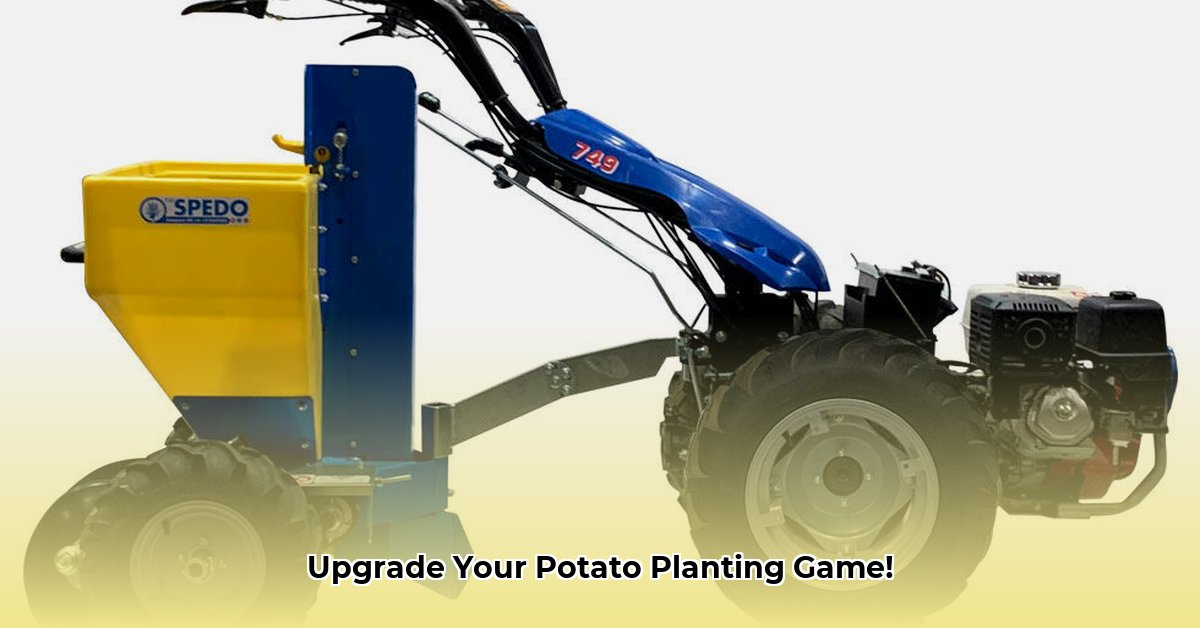
Choosing the right potato planter is crucial for maximizing your potato yield and efficiency. This guide provides a practical, step-by-step approach to selecting, using, and maintaining a planter that meets your farm's specific needs, whether you're a seasoned farmer or just starting out. For additional farm equipment options, check out this helpful resource on tractor implements.
Understanding Your Farming Operation: A Personalized Approach
Before selecting a planter, carefully assess your farm's unique characteristics. Several key factors influence your choice:
Farm Size and Scale: Large-scale operations benefit from the speed and efficiency of multi-row planters, while smaller farms often find single-row models more practical and maneuverable. Consider the total acreage you need to plant to determine the appropriate planter capacity.
Potato Variety: Different potato varieties vary in size and shape. Adjustable planting depth and spacing are essential to ensure consistent planting for optimal growth and ease of harvesting regardless of potato size.
Soil Type and Conditions: Soil type significantly impacts planter selection. Planters designed for loose, sandy soil may not perform well in heavy clay. Consider your soil's drainage, moisture content, and overall workability when making your selection. A planter well-suited to your soil type will ensure smooth operation and prevent planting challenges.
Budgetary Considerations: Potato planters vary greatly in price. Factor in the initial purchase price, potential maintenance costs, and the long-term return on investment. Used equipment can offer cost savings but requires careful inspection for functionality and condition prior to purchasing.
Types of Potato Planters: A Comparison
Several types of tractor-mounted potato planters exist, each with unique advantages and disadvantages:
Single-Row Planters: These are the most basic and affordable option, ideal for small farms and offering high maneuverability. However, their planting speed is slower than multi-row systems.
Multi-Row Planters: Designed for larger farms, these increase planting efficiency significantly. While more expensive, the time saved can offset the higher initial investment. They typically demand more powerful tractors.
Ground-Driven Planters: These utilize the tractor's power take-off (PTO) shaft, resulting in a reliable and simple setup with typically lower maintenance requirements. However, they might offer less precise control over planting depth and spacing compared to hydraulic options.
Hydraulic Planters: Offering the greatest control, these planters allow for precise adjustments to planting depth and seed spacing, often leading to higher yields and uniform growth. However, they require a higher initial investment and a tractor equipped with hydraulic capabilities, and the added complexity might increase maintenance needs.
Key Features: Maximizing Your Planter's Potential
Regardless of the type, several key features enhance planter performance:
Adjustable Row Spacing: Allows customization to optimize plant growth and accommodate various potato varieties. Experimentation to determine ideal row spacing for your soil and potato variety is crucial for yield optimization.
Adjustable Planting Depth: Precise depth control is vital for proper root development. Adjustable depth ensures optimal seed placement regardless of soil conditions. Experimentation is key to achieving the optimal depth setting for your soil type.
Reliable Seed Spacing Mechanisms: Consistent seed spacing is crucial for uniform growth and harvesting. Choose a planter with a dependable seed spacing mechanism that prevents overcrowding or underplanting.
Optional Fertilizer Application: Integrated fertilizer application capabilities improve efficiency by simultaneously planting and fertilizing. Consider this feature if it aligns with your fertilization practices.
Selecting and Maintaining Your Potato Planter: A Step-by-Step Guide
Assess Your Needs: Carefully analyze your farm's unique needs, considering farm size, potato variety, soil type, and budget. This initial step prevents costly mistakes.
Thorough Research: Explore different planter models using online resources, equipment dealers, and farmer networks. Compare features and specifications before making a decision.
Consider Pre-Owned Options: Used planters can be cost-effective, but a thorough inspection is crucial. Look for wear and tear and ensure all components function correctly. A pre-purchase inspection by a qualified mechanic is strongly recommended.
Compatibility Check: Verify your tractor has the necessary horsepower and hydraulic capabilities to operate the chosen planter. Incompatible equipment can cause significant problems.
Proactive Maintenance: Regularly maintain your planter according to manufacturer recommendations. Preventative maintenance minimizes breakdowns and ensures long-term reliability. This includes lubrication, adjustments, and thorough inspections.
Weighing the Pros and Cons: A Side-by-Side Comparison
| Planter Type | Advantages | Disadvantages |
|---|---|---|
| Single-Row | Low cost, easy operation, high maneuverability | Slower planting speed, limited to small farms |
| Multi-Row | High planting speed, ideal for large-scale operations | Higher initial cost, significant power requirements |
| Ground-Driven | Reliable, simple design, typically less maintenance | Potentially less precision in planting depth and spacing |
| Hydraulic | High precision, automation capabilities | High initial cost, requires hydraulic tractor, more complex maintenance |
Choosing a potato planter is a significant investment. Careful consideration of your farm's specific needs will ensure a higher yield and a more efficient harvest. Remember to prioritize thorough research and a pre-purchase inspection for optimal results.